If you’ve ever walked down Downtown Dubai or Jumeirah Beach Residence wondering why some restaurants are buzzing while others are empty at dinner time, here’s a reality check: tourists aren’t wandering the streets looking for food anymore, they’re letting Google Maps choose for them.
It may sound simple, but this has a significant impact on restaurant owners. If you don’t show up the right way on Google Maps, you are literally invisible to millions of potential customers. In this blog, we will learn about why tourists rely so heavily on Google Maps in Dubai and how restaurants can use this insight to attract more walk-in customers without spending on ads.
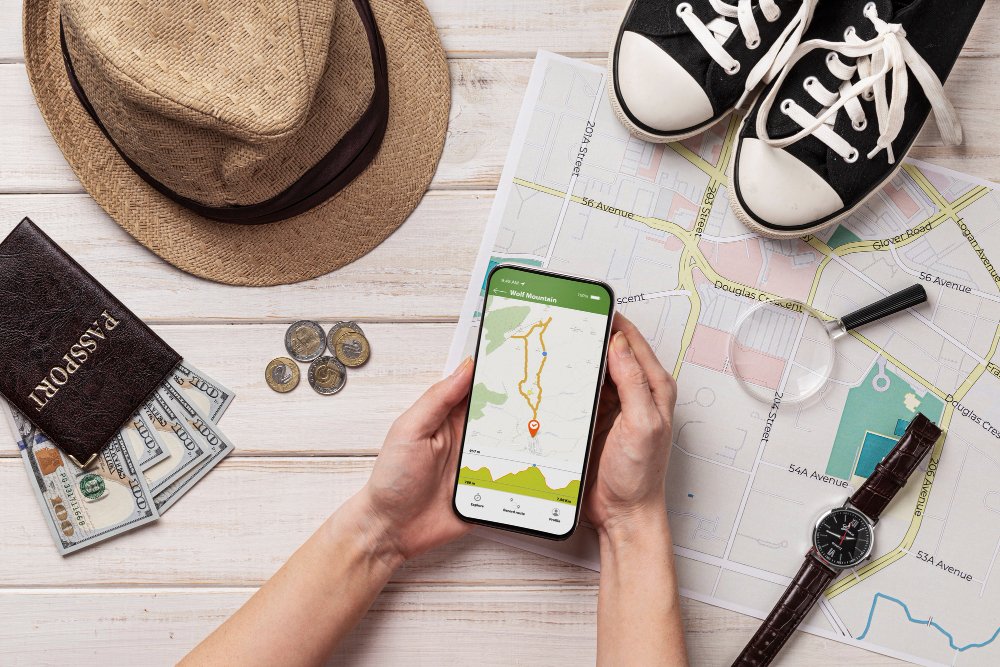
How Tourists Really Use Google Maps in Dubai?
Dubai welcomed around 17 million international visitors in 2023, making it one of the most visited cities in the world. What’s interesting is how those tourists decide where to eat in real time. The printed maps and guidebooks are gone.
Nearly every visitor arrives with Google Maps open on their phone, scanning nearby eats, reviews, photos, and directions. They use Google Maps very differently than locals. With residents, maps are often used to get to work or familiar places. But tourists? Their search behavior is active discovery:
1. Tourists Search Then Go Anywhere
Visitors type things like:
- “best breakfast near Dubai Mall”
- “top Arabic lunch JBR”
- “brunch restaurants Dubai Marina”
These searches are intent-rich, meaning the person is ready to visit now. According to local search data, 76% of mobile local searches result in a store or restaurant visit within 24 hours. For restaurants, that’s not a casual browse, that’s potential paying customers walking through your doors.
2. Google Map Dominance
Google Maps is a travel guide in people’s hands. Whether a guest hums “nearby brunch spot” while sipping Arabic coffee or searches for “best shawarma near me,” they expect instant results with ratings, photos, and directions. According to global Google Maps behavior reports, about 40% of users explore restaurants and cafes using Maps’ search tools, not random apps.
3. Tourists Take Decisions Based on Reviews
Dubai’s dining scene is one of the most competitive in the world. A 2024 gastronomy report found Google searches related to dining in the city jumped 23.5% year-on-year, showing tourists (and locals) are increasingly researching places before they eat.
Visitors don’t just pick the closest place: they pick the best reviewed, most photographed, and most helpful profile on Maps. It’s the digital equivalent of walking down the street and seeing a long queue near a food outlet. Our brains trust that more people means better food.
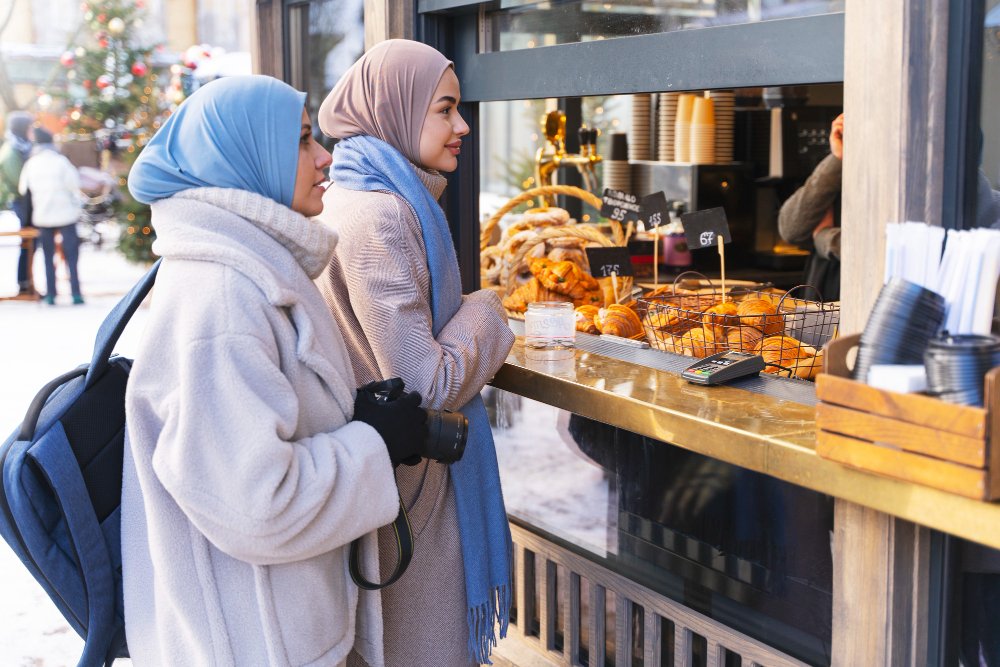
How does Google Maps affect bookings?
Imagine two restaurants 200 meters apart, near Burj Khalifa:
Place A
- 4.7 stars
- 250+ Google reviews
- 50 recent photos
- Menu link, updated hours, responded to last 10 reviews
Place B
- 4.2 stars
- 30 reviews
- No recent photos
- No replies to reviews
Which one do you think a tourist picks? Almost always Place A, and that choice happens before they see the restaurant in real life, based entirely on the Maps profile. That’s the power of Google Maps.
How Restaurants Can Capture Tourists in UAE?
So, now you know how tourists use Google Maps, let’s talk about how restaurants can take advantage of that behavior.
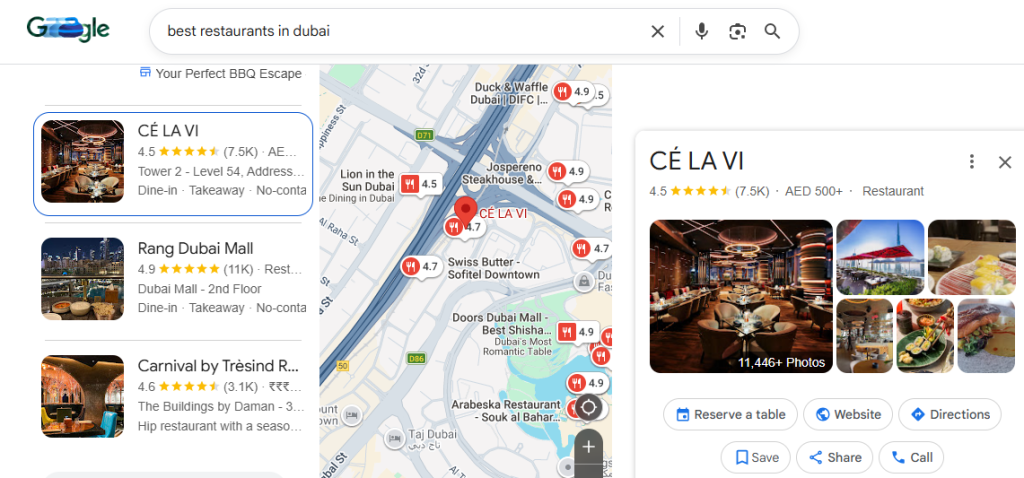
1. Make Your Profile Attractive Before They Arrive
Tourists don’t only look for your food; they notice:
- Recent photos
- Clear menu links
- Updated opening hours (especially Ramadan or holidays)
- Consistent ratings
- Profiles with high-quality visuals and recent reviews get more clicks on “Call”, “Directions”, and “Website”.
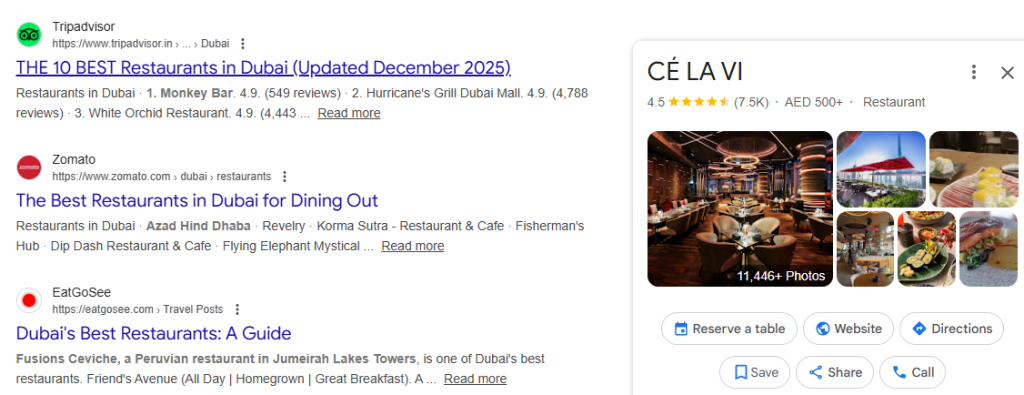
2. Be Everywhere They Search
Google Maps is the default navigation and dining guide in Dubai, not just a route finder. With over 90% smartphone penetration in the UAE and Google as the dominant search platform, Maps drives the majority of restaurant discovery. This means listing completeness and accuracy is your clear ONLINE visibility.
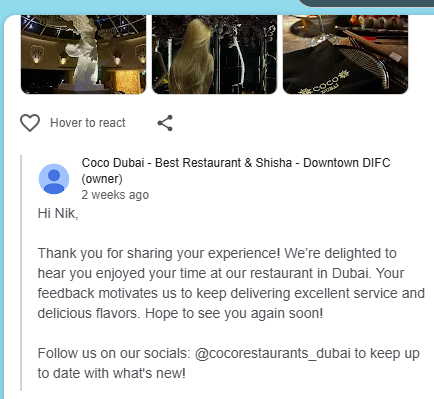
3. Responding to Reviews Isn’t Optional
Tourists read reviews like they’re personal recommendations. A study found online reviews influence everyday dining choices (27% of people) and special occasions (34%). Replying to a review, especially a critical one, increases your trustworthiness massively. Tourists see that and think, this place cares.
Dubai Is a Food Capital, but Is Your Restaurant Easy to Find?
Dubai isn’t just another city, it’s a global culinary magnet. In 2024, Dubai ranked second globally for a variety of dining experiences, ahead of big cities like London and New York. That means visitors aren’t just here for the Burj Khalifa, they’re here because Dubai is a destination for food itself. Restaurants are now tourism assets.
That sounds great, until you realize that there are thousands of restaurants and cafes competing for those search clicks. So, if your restaurant doesn’t optimize for the tourist Google Maps behavior, someone else steals your business before you even open your doors that day.
Quick Action Plan for Restaurants
Want a simple way to start capturing those tourist Google Maps searches?
Step 1: Optimize Your Profile
- Accurate name, address, phone
- Updated opening hours including holidays
- Website link & menu link
Step 2: Add Photos Weekly
Tourists judge with their eyes. Photos increase engagement.
Step 3: Ask Every Happy Visitor for a Review
More positive reviews means higher rankings and trust on Google Maps.
Step 4: Reply to Reviews Fast
Even simple “Thank you!” shows attentiveness.
Step 5: Use Local Keywords
Include cuisine and neighborhood terms like:
- “Italian restaurant Dubai Marina”
- “Best biryani near Downtown Dubai”
Because tourists search by type + location, not by your brand name.
How Famepilot Can Help Restaurants Capture Tourist Searches?
When tourists rely on Google Maps to decide where to eat, restaurants need more than just a basic listing, they need consistency, speed, and visibility. This is where Famepilot can help you.
Famepilot helps restaurants manage Google reviews, listings, and online mentions from one dashboard, making it easier to stay visible across high-traffic tourist areas.
- With Listing Management Software, restaurants can keep business hours, contact details, photos, and menus updated across locations, critical during peak tourist seasons and holidays.
- The Review Management Software brings all customer reviews into one place, allowing faster responses and better engagement. Tourists trust restaurants that reply to reviews, especially when choosing where to dine in an unfamiliar city like Dubai.
- Social Listening Software adds another layer by tracking what people are saying about your restaurant on social platforms. This helps identify trends, catch issues early, and understand what tourists actually notice and talk about.
In short, Famepilot helps restaurants stay discoverable, credible, and competitive, right where tourists are searching.
Final Thought
If someone is standing five blocks from your restaurant at 8 PM with their phone open, the Google Maps profile is often their deciding factor: not a flyer, not a billboard, not a website. You don’t need luck. You need visibility.
Most restaurants haven’t fully optimized for Google Maps yet. That means if you do it right, you don’t just attract tourists, you own those searches. And that’s where millions in foot traffic and revenue begins. Need help? Call or get in touch with Business Listing Experts at Famepilot today!
- Our email id – [email protected]
- Book a Demo with Us – https://famepilot.com/product-demo/
- Our Contact Us (form) – https://famepilot.com/contact-famepilot/