When someone searches for “restaurants near me” or “best hotel in (city),” Google Maps and the Local Map Pack show the top businesses. If your company is missing from this section, you are losing calls, bookings, and customers. However, you can improve your Google Maps ranking with some proven steps. In this blog, we will explain the main factors that are useful to rank businesses on Google and how you can optimize for each.
Key Ranking Factors in Google Maps
Google uses three main signals to decide which businesses appear in the local map pack.
- Proximity: How close your business is to the searcher.
- Relevance: How well your profile matches the search intent.
- Prominence: How popular and trusted your business appears online.
You cannot control proximity, but you can work on relevance and prominence. Let’s see how.
Step 1: Claim and Optimize Your Google Business Profile
Your Google Business Profile (GBP) is the foundation. Make sure you:
- Claim and verify your profile.
- Select the right categories.
- Add business hours, website link, and service areas.
- Upload high-quality photos of your location, staff, and products.
- Use your exact business name, address, and phone number (NAP) consistently.
A complete and accurate profile increases your chances of appearing higher in Google Maps.
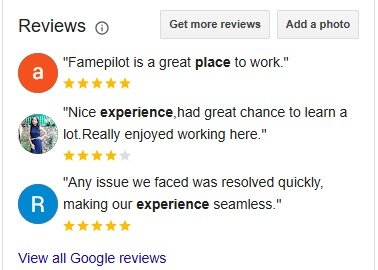
Step 2: Get More Google Reviews
Reviews play a direct role in local ranking. They also build trust with potential customers.
- Ask satisfied customers to leave a review.
- Reply to all reviews, both positive and negative.
- Use natural keywords in your responses where possible.
The higher the number and quality of reviews, the stronger your prominence.
Step 3: Build Local Citations
Citations are mentions of your business name, address, and phone number on other websites. Examples include Yelp, Yellow Pages, Facebook, other local directories, local news sites, and industry portals.
- Ensure your NAP is consistent everywhere.
- Correct any outdated or duplicate listings.
- Strong citations improve both relevance and prominence.
- Submit your business to trusted directories like Yelp, Justdial, and Yellow Pages.
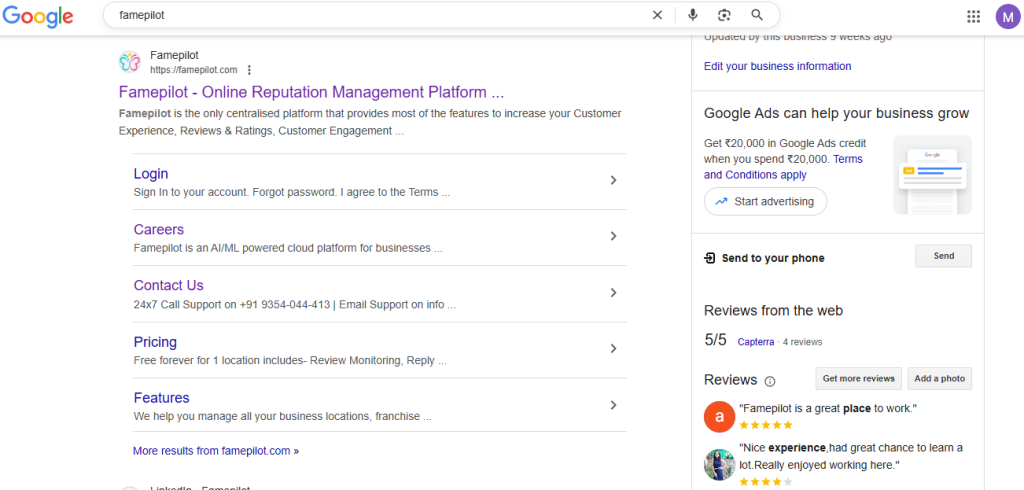
Step 4: Improve Your Website for Local SEO
Google also looks at your website to rank your business. A locally optimized website boosts your map rankings.
- Create location-specific landing pages.
- Add embedded Google Maps to your contact page.
- Build backlinks from local blogs, chambers of commerce, and event websites.
- Use local keywords like “hotel in Pune” or “restaurant in Connaught Place.”
Step 5: Use Backlinks to Build Authority
Backlinks are links from other sites pointing to yours. Google considers them a signal of trust.
- Partner with local bloggers and influencers.
- Share press releases on local media sites.
- Sponsor community events and get featured on their websites.
- More high-quality backlinks increase your domain authority and prominence.
Step 6: Post Regularly on Google Business Profile
Regular posting signals that your business is active and relevant.
- Google rewards businesses that stay active.
- Share updates, offers, and events through GBP posts.
- Add seasonal photos and product updates.
- Highlight customer success stories.
How can Famepilot help you to Improve Rankings in Google Maps and Local Map Pack?
If you want to save time and manage all these steps in one place, Google Business Profile and Listings Optimisation experts at Famepilot help businesses to manage their listings, rank higher on local searches, and improve local SEO performance.
Not only this, in order to track the performance of multi-location business outlets, you can take help from Famepilot’s listings management console, which offers various features to reach your potential customers.
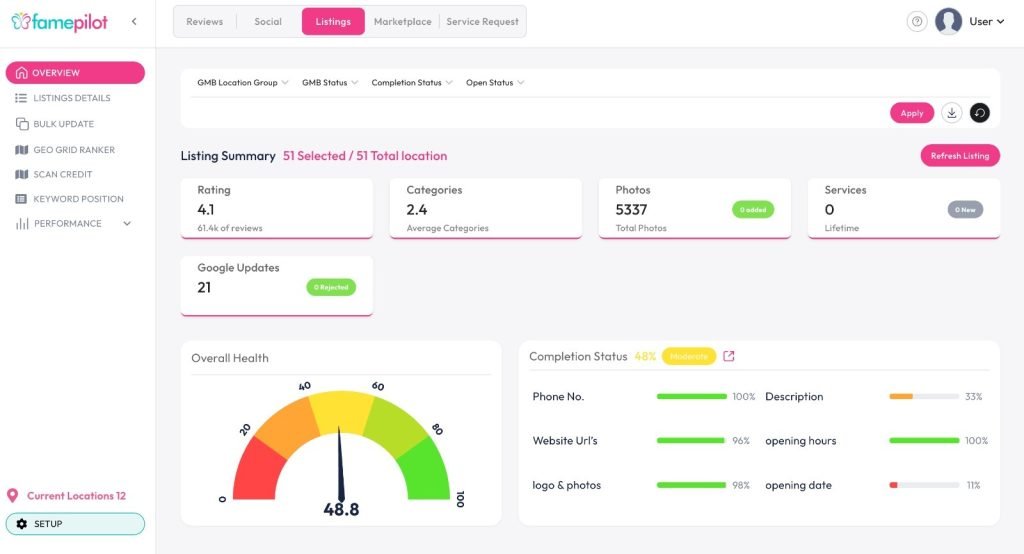
Key Highlights of Famepilot’s Listing Management Console
- Centralized Dashboard: Manage all your business listings across Google, Bing, Apple Maps, and more from a single platform.
- Listing Details: Keep every detail of your hotels, restaurants, or outlets consistent, such as name, address, phone number, website, hours, categories, and more.
- Bulk Updates: Update hundreds of listings in one go instead of editing each manually. This saves time and avoids errors.
- Keyword Position Tracking: Monitor how your business ranks for important keywords in local searches. Understand which keywords drive visibility.
- GeoGrid Ranker: Visualize your local search performance with map-based heat grids. See how your business appears to customers in different neighborhoods.
- Performance Insights: Get reports on impressions, clicks, calls, and direction requests. Measure what’s working and where you need to improve.
- Multi-location Support: Perfect for hotel chains, restaurant groups, and franchises. Manage all locations with accuracy and consistency.
- Local SEO Boost: Ensure your NAP (Name, Address, Phone) details are accurate across the web. This directly improves your Google Maps and local SEO rankings.
- Competitive Advantage: Spot where competitors are ranking higher in local search. Use insights to refine your local marketing strategy.
Final Thoughts
Ranking higher in Google Maps and the local map pack is not a one-time task. It requires consistency. By optimizing your Google Business Profile, managing reviews, building citations, improving your website, and earning backlinks, you can steadily climb to the top.
Need help or want to talk to an expert? Connect with us today!
- Our email ID – [email protected]
- Book a Demo with Us to see how our listings management console works – https://famepilot.com/product-demo/
- Our Contact Us (form) – https://famepilot.com/contact-famepilot/