Good reviews are more than just kind words—they’re conversion tools, trust signals, and growth drivers. But to get the most out of them, you need more than just a good reputation—you need good data.
Whether you are running a chain of luxury hotels or a single restaurant, what your guests say online shapes your brand image, impacts bookings, and defines your growth trajectory.
In the hospitality business, managing reviews is not just about responding—it’s about tracking the right metrics, making data-driven decisions, and improving the customer experience continuously.
Below is a breakdown of the Top 10 Review Management Metrics, so you know what to track, where to find it, and why it matters.
1. Review Volume
The total number of reviews your property receives across platforms like Google, TripAdvisor, Zomato, and Swiggy.
Why it matters: The more reviews you have, the more credible and trustworthy your business looks to new customers. Google also prioritizes businesses with active review profiles in local search results.
Additionally, a steady increase in reviews leads to increased customer engagement and a better chance of ranking higher in local search results.
Action Tip: Encourage feedback through QR codes, automated requests via SMS or WhatsApp, and on-premise reminders.
How Famepilot helps:
- View daily, weekly, and monthly review trends.
- Filter by platform, outlet, or date range.
- Identify spikes or drops in reviews to evaluate campaign impact or service quality.
2. Star Rating (Average and Detailed)
a) Average Rating: It’s the average star rating of your property across platforms.
Why it matters: Understand which platforms or locations need attention and where you’re excelling. Ratings below 4 can negatively impact booking decisions. A higher rating attracts more clicks and conversions.
b) Rating Over Time: Track how your star ratings change monthly or quarterly.
Why it matters: Sudden dips or improvements can signal service issues or successful interventions.
c) Rating by Source: Know how each platform rates your business—Google, Zomato (Dining/Delivery), Swiggy, etc.
Why it matters: Some platforms may show consistently lower ratings. This tells you where to focus.
d) Rating by Location: Compare ratings across multiple hotel branches or outlets.
Why it matters: This helps multi-location brands identify underperforming sites.
Dashboard view: You get a visual graph and table layout with filters for time, source, and location.
3. Review Response Rate
a) Overall Response Rate: The percentage of reviews responded to—positive and negative.
Why it matters: According to a study, 74% of hotel guests are more likely to book with a property that responds to reviews. High response rates show you’re listening to customers which help you boost your credibility.
Goal: Aim for a response rate above 70%.
Dashboard view: This metric is displayed as a percentage with status indicators like “Responded to Positive Reviews,” and “Responded to Negative Reviews,”.
b) Provider-wise Response Rate: Break down response rates by Google, Zomato, TripAdvisor, and others.
Why it matters: It helps allocate your team’s time more efficiently by prioritizing platforms with high visibility.
Dashboard view: This metric is displayed as a percentage with status indicators like “Total Review”, “responded”, and “Not-responded”.
Pro Tip: Use AI-powered automated replies to ensure consistent and timely engagement.
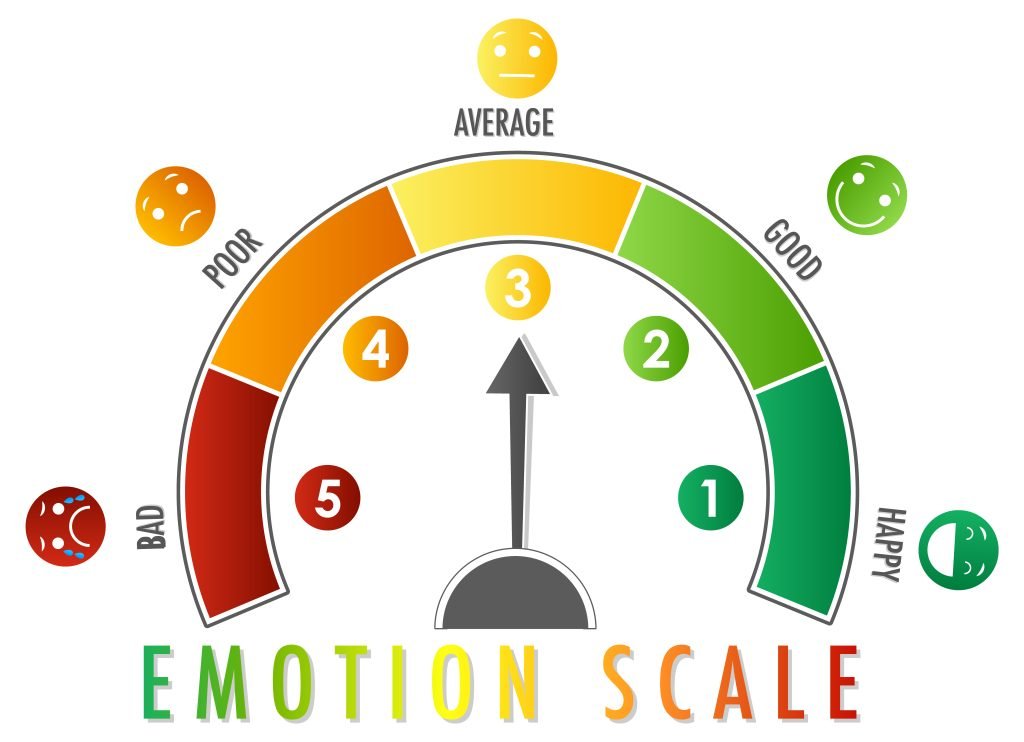
4. Overall Brand Sentiment
a) Sentiment Over Time: Track how guest sentiment (positive/neutral/negative) shifts over months.
Why it matters: Improving sentiment = better customer experience = more return visits.
b) Sentiment by Source: Analyze how each platform contributes to your brand’s perception.
Why it matters: Negative sentiment on a key platform like Google or Zomato can directly impact foot traffic and orders.
c) Sentiment by Location
Sentiment analysis at branch level helps assess local service quality and training effectiveness.
Why it matters: Sentiment insights help you make quick operational decisions (e.g., more training at one branch).
Famepilot Dashboard view: Color-coded graphs showing % of positive, neutral, and negative reviews.
5. Time to Respond to Reviews
The average time taken to respond to reviews.
Why it matters: Customers expect quick responses. A delayed reply to a negative review can escalate into a larger reputation issue.
Quick replies improve customer satisfaction and can neutralize negative feedback fast.
Goal: Respond within 24-48 hours.
Dashboard view: Displayed as time range (e.g.,Sun, Jun 1, 2025 10:51 PM).
Pro tip: Famepilot sends you on-time alerts and notifications so you can respond faster and keep this metric healthy.

6. Review Source Distribution
The percentage breakdown of total reviews by platform—Google, Zomato, Swiggy, Facebook, etc.
Why it matters: Understanding where your reviews come from helps tailor platform-specific marketing and engagement strategies. Understand where to focus your energy- Google vs. Zomato vs. Swiggy, depending on customer traffic and review volume.
Use Case: If 60% of your reviews are on Google, you should prioritize optimizing your Google Business Profile.
Dashboard view: Pie charts and bar graphs showing % share of each review platform.
7. Review Channel Display Rating
Tracks how your business is rated across different display categories:
- Google Display Rating
- Zomato Dining Rating
- Zomato Delivery Rating
- Swiggy Rating
Why it matters: Different channels serve different customer intentions. Dine-in and delivery guests often have different expectations. These segmented scores help fine-tune specific services.
Your dine-in guests may love the ambiance, but delivery customers may face packaging issues. This metric reveals such patterns.
Dashboard view: Segmented view so you can track performance for dine-in, delivery, or takeout separately.
Action Tip: Optimize service per channel—for example, better packaging for delivery or training staff for dine-in service.
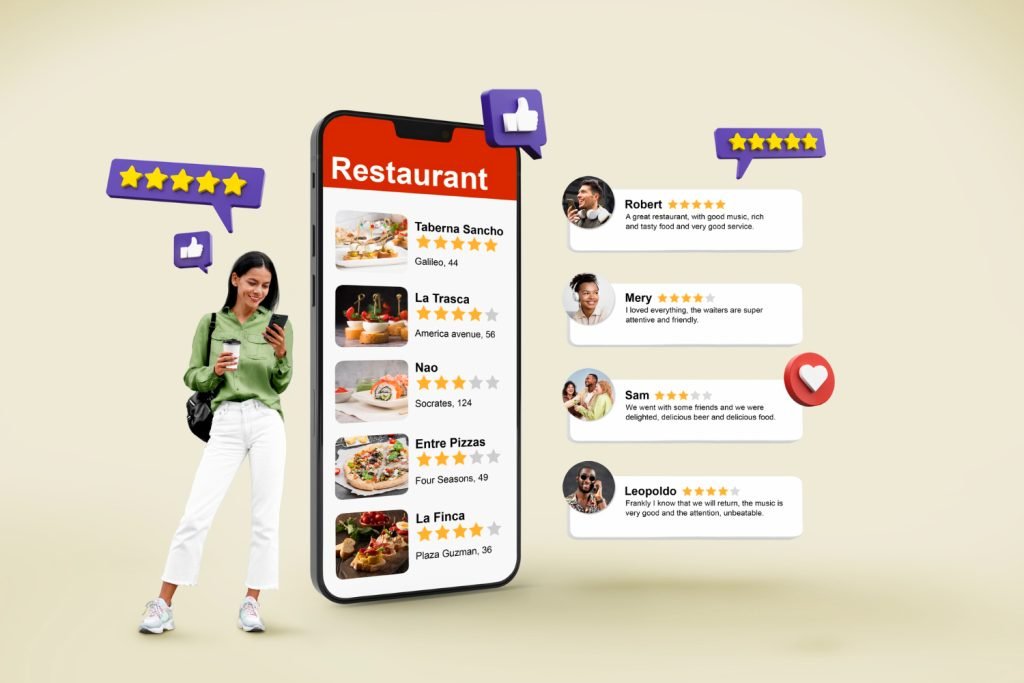
8. Review Keywords and Topics
Famepilot scans all reviews using AI to highlight commonly used words and recurring topics—like “slow service,” “great ambiance,” or “tasty food.” In other words, it is an automatic extraction of frequently mentioned words and themes—like “clean rooms,” “slow service,” “friendly staff.”
Dashboard view: Word clouds, tag counts, and a list of top keywords associated with positive, negative, or neutral reviews.
Why it matters: Quickly see what customers talk about the most and make improvements based on real feedback. This also helps you identify what guests love or dislike without reading every review manually.
Action Tip: Fix recurring negatives quickly. Promote recurring positives in your marketing material.
Interested to know the latest Reputation Management Trends, read Top 50 Reputation Management Trends to Watch in 2025
9. Tag Report by Count
A categorized report of review sentiments marked as positive, negative, or neutral.
Why it matters: Helps you understand customer mood and operational areas that need attention.
Example Insight: A restaurant may have 80% positive tags for food but 50% negative tags for service. That’s where to act first.
Dashboard view: Bar graph showing total number of reviews under each sentiment tag for each location and platform.
Why it matters: Aids you in focusing operational efforts—whether that’s addressing complaints or doubling down on what’s working.

10. NPS (Net Promoter Score)
A loyalty metric that asks guests: How likely are you to recommend us? (on a scale of 0 to 10).
Why it matters: NPS helps measure customer loyalty and satisfaction beyond just star ratings. Higher NPS = higher chances of referrals.
Score Breakdown:
- Promoters (9–10): Love your service and will refer others.
- Passives (7–8): Satisfied but unenthusiastic.
- Detractors (0–6): Unhappy guests who might leave negative reviews.
Goal: Increase the percentage of promoters over time.
How to Use These Review Management Metrics to Improve Your Hotel or Restaurant Business?
- Fix Negative Patterns: If review sentiment drops at one outlet, investigate staff or service issues.
- Boost Popular Features: If “fast service” or “great ambience” keeps showing up, promote it in your marketing.
- Benchmark Branches: Track which branches perform best and use that model to improve others.
- Smarter Decision-Making: Use data, not guesswork, to allocate budgets, staff training, and marketing.
Also Read: 22 Review Management Stats that will blow your mind
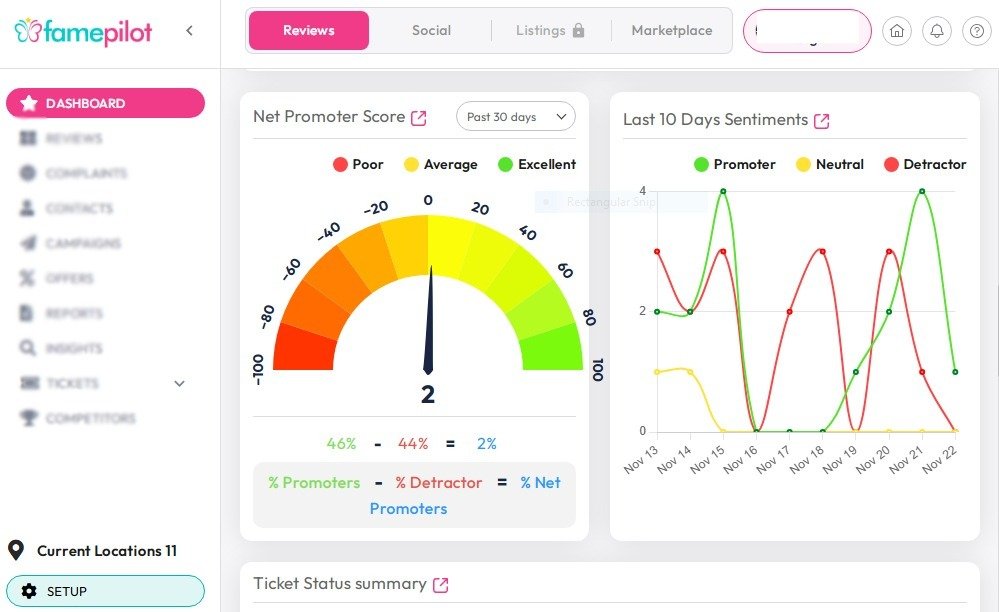
About Famepilot, No.1 Review Management Tool
- Real-time Review Alerts & AI-Powered Responses: Be the first to know and respond, with tailored replies.
- Detailed Metrics Dashboard: Visualize review trends and brand sentiment across time, platforms, and locations.
- Keyword & Sentiment Analysis: Get granular insights without sifting through hundreds of reviews.
- Location-Based Ratings & Feedback Reports: Improve operations by benchmarking your outlets.
- Automated Feedback Requests via QR, SMS, WhatsApp: Increase review volume and engagement automatically.
- Integrated with Google, Zomato, Swiggy, Facebook, and more: Manage all platforms from a single dashboard.
Using the Famepilot dashboard, hospitality businesses can track all the metrics above in real-time—across locations, platforms, and time zones.
Final Words
Monitoring online reviews isn’t enough. To truly benefit from customer feedback, you need clarity, context, and actionable insights. Famepilot’s dashboard provides exactly that. Tracking these top 10 metrics helps you measure, improve, and scale your customer experience strategy.
With tools like Famepilot, you don’t just manage reviews—you manage your business with insight and confidence. From review volume to sentiment analytics, NPS, response tracking, and keyword intelligence, every metric is crafted to help hotels and restaurants grow smartly.
Are you ready to utilize the full potential of review management for your brand’s online success?
Book a personalized demo with Famepilot and start turning your reviews into bookings, loyalty, and growth.
- Our email id – [email protected]
- Book a Demo with Us – https://famepilot.com/product-demo/
- Our Contact Us (form) – https://famepilot.com/contact-famepilot/